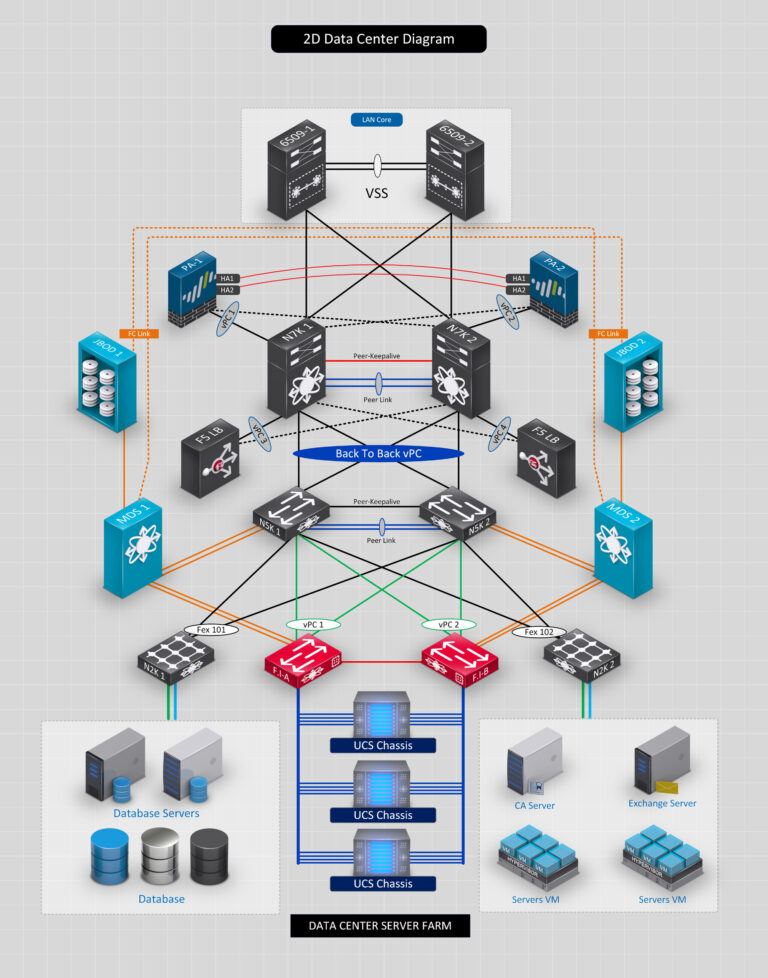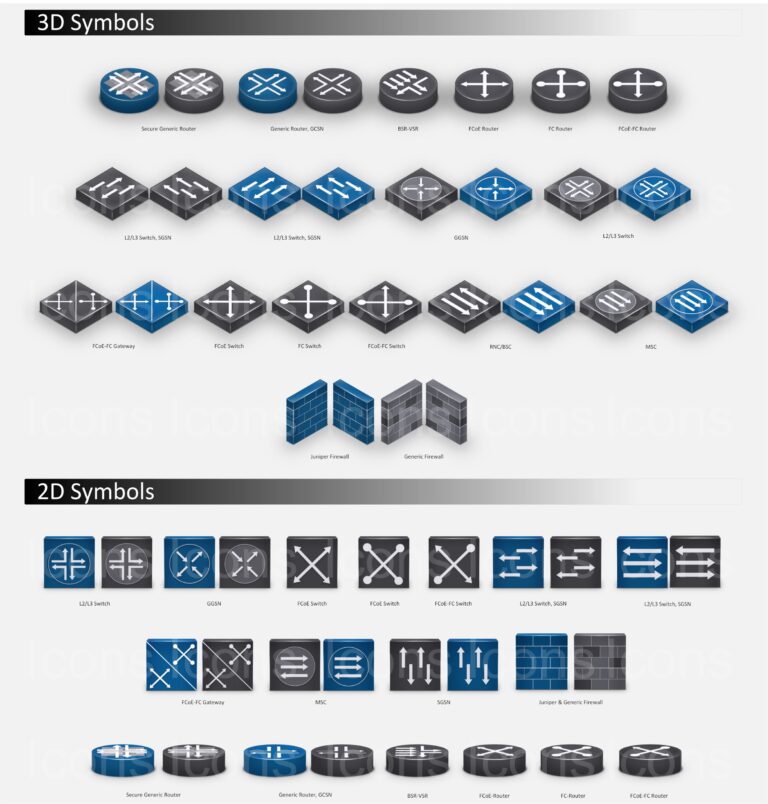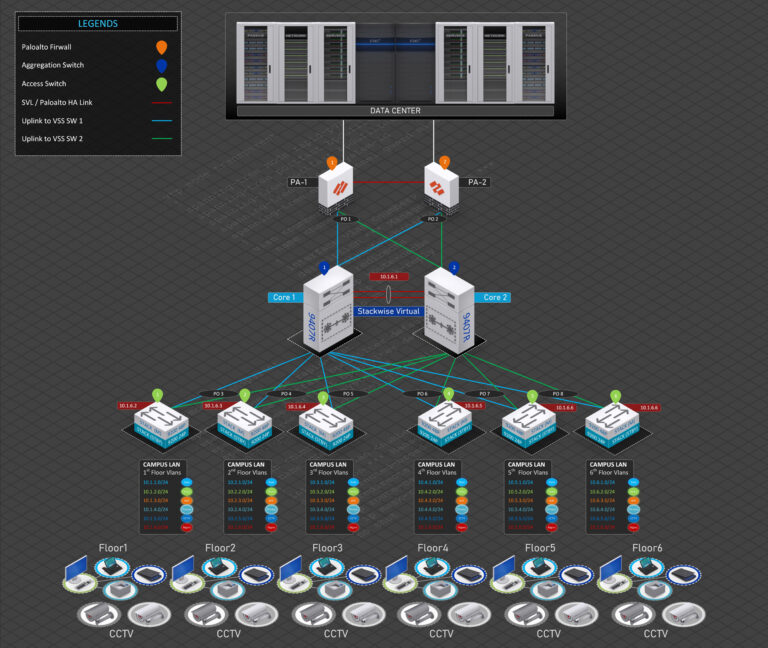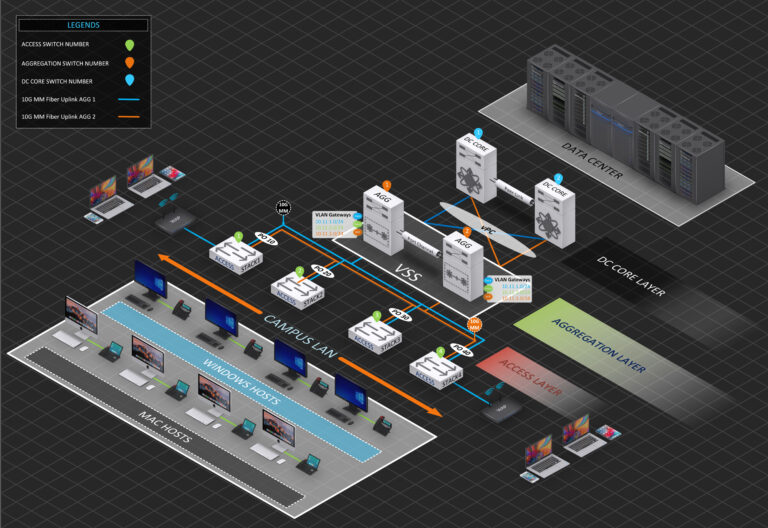

2D Network Templates
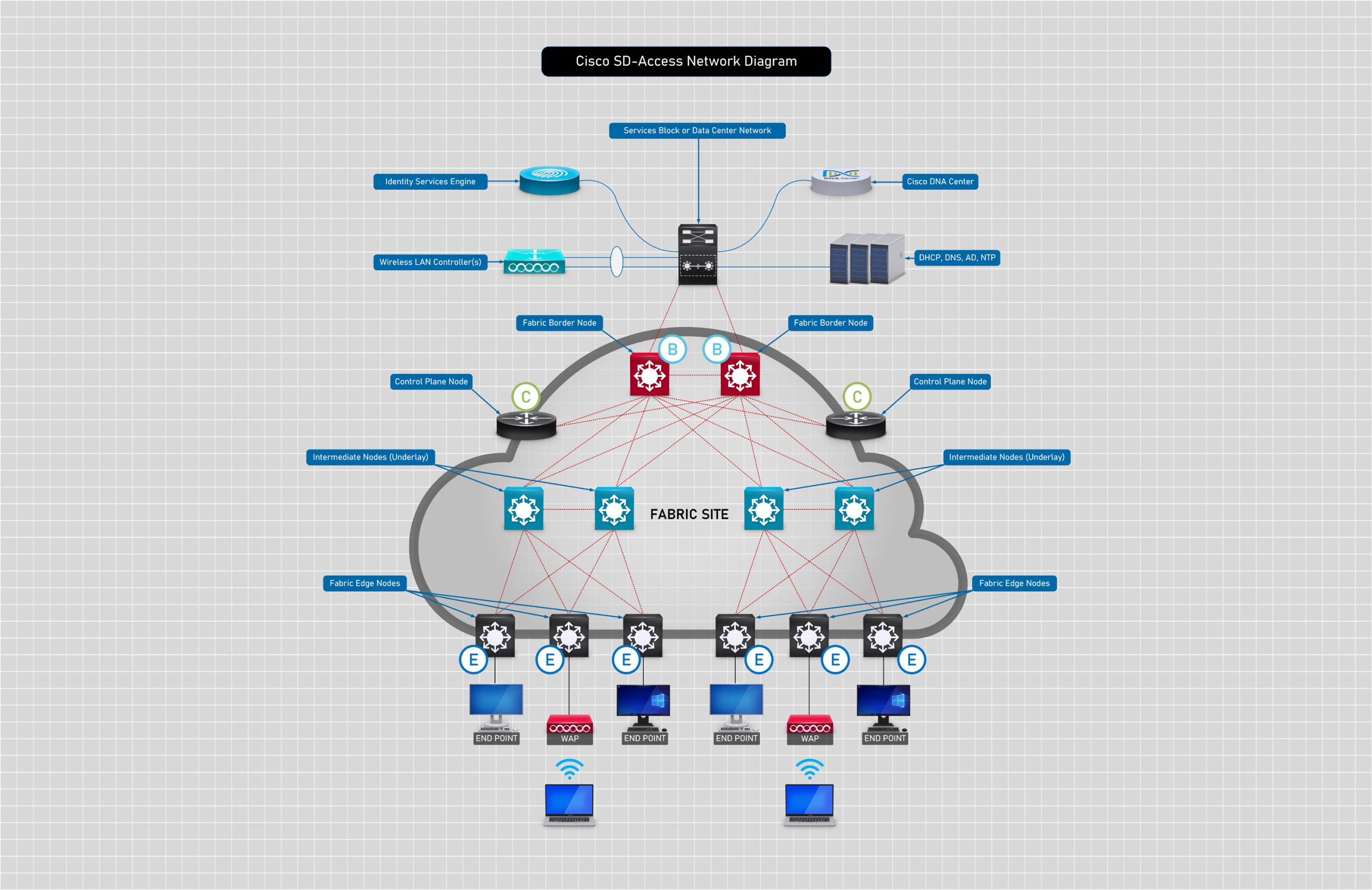
2D Template 14 Cisco SD Access Diagram
$12.99
Format: Microsoft Visio (.vsdx) – also imports into Visio-compatible software
- Perpetual licence: no expiry and no yearly fee
- Download link straight after payment
- Works with Microsoft Visio and Visio-compatible software
- Included in every subscription plan
Need lots of products? A subscription includes everything.
Not sure yet? Try the free network symbols pack first to check the quality.
About this product
Cisco SD Access 2D Template 14 is a high-quality template with amazing visual effects.
Cisco Software-Defined Access (SD-Access) architecture revolutionizes traditional networking by introducing a programmable, automated, and secure approach to network design and management. At its core, SD-Access simplifies network operations, enhances security, and provides a consistent user experience across wired and wireless networks.
Key Components:
- DNA Center:
- Role: The command and control platform for SD-Access.
- Functions: Provides centralized management, automation, and analytics. It simplifies device provisioning, policy enforcement, and network assurance through a single interface.
- Fabric:
- Role: The foundational structure of SD-Access.
- Components:
- Fabric Edge Nodes: These are switches that connect end-user devices to the network.
- Fabric Control Nodes: Handle endpoint registration, location services, and Layer 3 routing.
- Fabric Border Nodes: Interface between the fabric and external networks, providing route redistribution and policy enforcement.
- Identity Services Engine (ISE):
- Role: Central to security and policy enforcement.
- Functions: Provides secure access control by defining and managing user and device identities, ensuring only authorized entities access network resources.
- Cisco Catalyst Switches and Wireless Controllers:
- Role: Provide the hardware infrastructure for SD-Access.
- Functions: Support advanced features such as segmentation, automation, and policy-based management.
Features and Benefits:
- Automation: Automates device onboarding, configuration, and management, reducing operational complexity.
- Segmentation: Uses virtual networks and scalable group tags to segment traffic, improving security and performance.
- Assurance: Continuously monitors network health and performance, offering insights and proactive issue resolution.
- Policy-Based Management: Simplifies policy creation and enforcement across the entire network.
Cisco SD Access architecture thus enables organizations to build agile, secure, and highly efficient networks, capable of meeting the demands of modern digital business environments